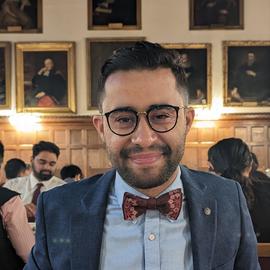
Adel Bibi
Senior Researcher in Machine Learning and R&D Distinguished Advisor
University of Oxford
Softserve
Biography
Adel Bibi is a Senior Researcher in Machine Learning and Computer Vision at the Department of Engineering Science at the University of Oxford, a Research Member of the Common Room and a former Junior Fellow at Kellogg College, and a member of the ELLIS Society. He is also an R&D Distinguished Advisor at SoftServe. Previously, he was a Senior Research Associate and postdoctoral researcher in the Torr Vision Group at Oxford working with Philip H.S. Torr. He obtained his MSc and PhD from KAUST in 2016 and 2020, respectively, under the supervision of Bernard Ghanem.
His research focuses on trustworthy and robust AI, agentic AI safety, and adversarial machine learning. His recent work on vulnerabilities in AI agents, transferable adversarial attacks, and AI safety evaluations has received broad international attention, including coverage by Scientific American, The Guardian, NBC News, Computerphile, TLDR News, Globo TV, and the Hugging Face Evaluation Guidebook. His work has received multiple paper and service distinctions, including four best/outstanding workshop paper awards (NeurIPS'23, ICML'23, CVPR'22, OBD'18), four outstanding reviewer awards (CVPR18, CVPR19, ICCV19, ICLR22), and a Notable Area Chair Award at NeurIPS 2023. He regularly serves as a Senior Area Chair and Area Chair for major AI conferences including NeurIPS, ICML, ICLR, etc. Bibi has authored more than 50 publications in top-tier machine learning and computer vision venues, including NeurIPS, ICML, ICLR, CVPR, ICCV, ECCV, AAAI, and TPAMI.
Download my resume
[Note!] I am always looking for strong self-motivated PhD students. If you are interested in AI Safety, Trustworthy, and Security of AI models and Agentic AI, reach out!
[Consulting Expertise] I have consulted in the past on projects spanning core machine learning and data science, computer vision, certification and AI safety, optimization formulations for matching and resource allocation problems, among other areas.
Background

King Abdullah University of Science and Technology (KAUST)
PhD in Electrical Engineering (4.0/4.0)
2020
Machine Learning & Optimization Track
MSc in Electrical Engineering (4.0/4.0)
2016
Computer Vision Track

BSc in Electrical Engineering (3.99/4.0)
2014
Thesis: Synthetic Artificial Intelligent Clothes

Senior Researcher
Mar 2023 – Present
- Leading 3 PhD students and 3 postdocs on AI safety research.
- Awarded Horizon Europe Grant, KAUST-CRG grant, UK AISI Safety Grant, Toyota Motor Europe Grant, and Google Gemma 2 Award ($2.152M total).
Senior Research Associate
Dec 2021 – Feb 2023
- Co-supervised 5 PhD students on robustness and continual learning.
- Amazon Research Award, ICLR 2022 Highlighted Reviewer, AAAI 2023 AC, ELLIS member.
Postdoctoral Research Assistant
Oct 2020 – Dec 2021
- Junior Fellow, Kellogg College; KAUST-CRG grantee (~$210k).

R&D Distinguished Advisor
Aug 2024 – Present
- Leading two research programs within R&D: (1) Agentic AI and (2) AI Security with 10+ engineers.

Executive Director
Aug 2025 – Present
- AI Strategy, research, and product.

Chief AI Officer
Feb 2023 – Present
- Leading data scientists to develop AI technologies for insurance.

PhD Research Intern
Jun – Nov 2018
- Studying the theoretical connections between feed-forward layers and stochastic solvers.
Postdoctoral Researchers

James Oldfield
Postdoctoral Researcher, University of Oxford

Liang Chen
Postdoctoral Researcher, University of Oxford
PhD Students

Joseph Rance
PhD Student, University of Oxford

Joseph Miller
PhD Student, University of Oxford

Yupeng (Sam) Chen
PhD Student, University of Oxford
MSc Students

Lily Li
MSc Student, University of Oxford
Former Postdocs
Graduated PhD Students
Graduated MSc Students

Nuo Xu
MSc, University of Oxford, 2026

Arshia Hemmat
MSc, University of Oxford, 2026

Aniruddh Pramod
MSc, University of Oxford, 2026

Maryna Horbach
MSc, University of Oxford, 2026

Sam Wang
MSc, University of Oxford, 2025

Jonathan Sneh
MSc, University of Oxford, 2025
Akshat Naik
MSc, University of Oxford, 2025
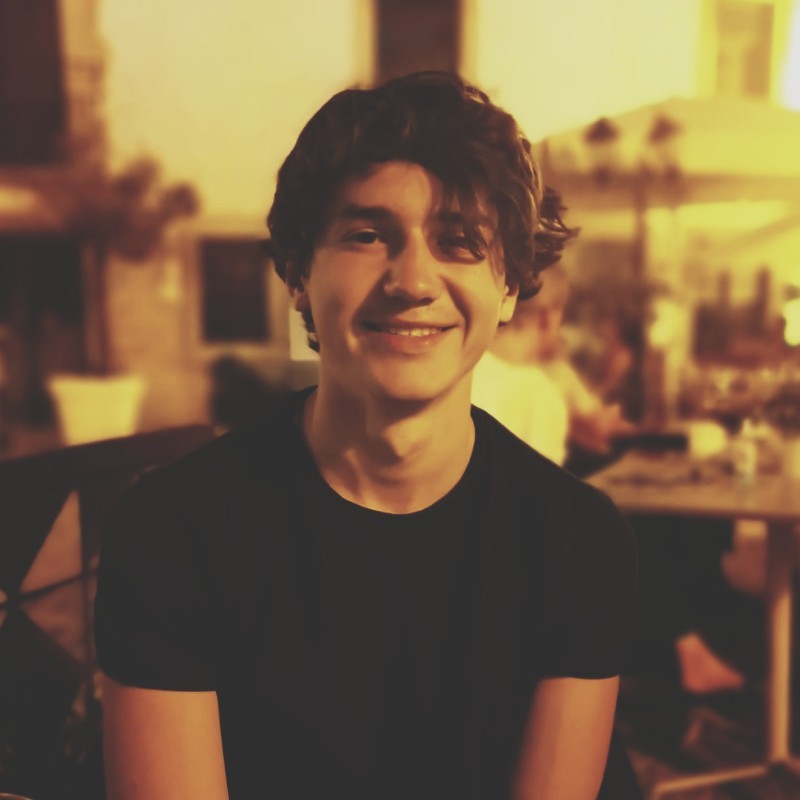
Thierry Blankenstein
MSc, University of Oxford, 2025
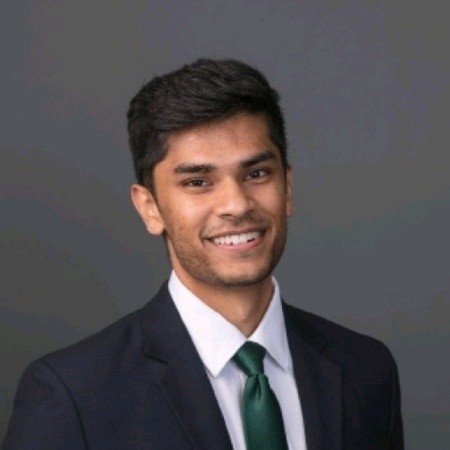
Preetham Arvind
MSc, University of Oxford, 2024
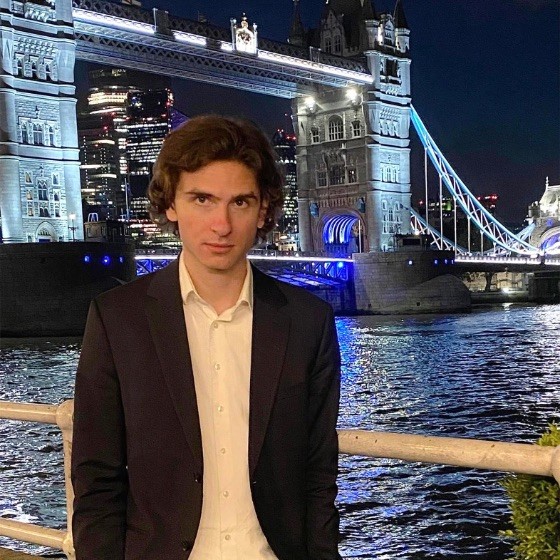
Luca Furtuna
MSc, University of Oxford, 2024
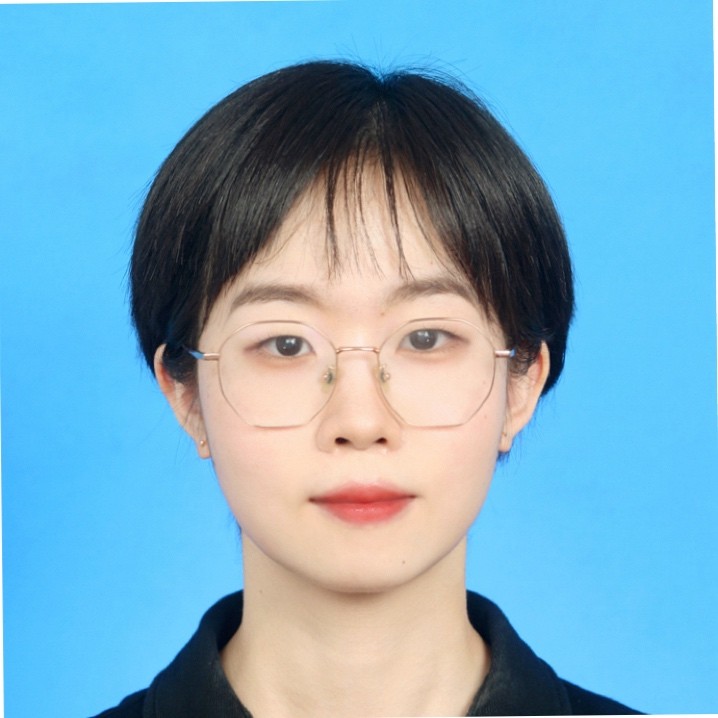
Enbo Lyu
MSc, University of Oxford, 2024
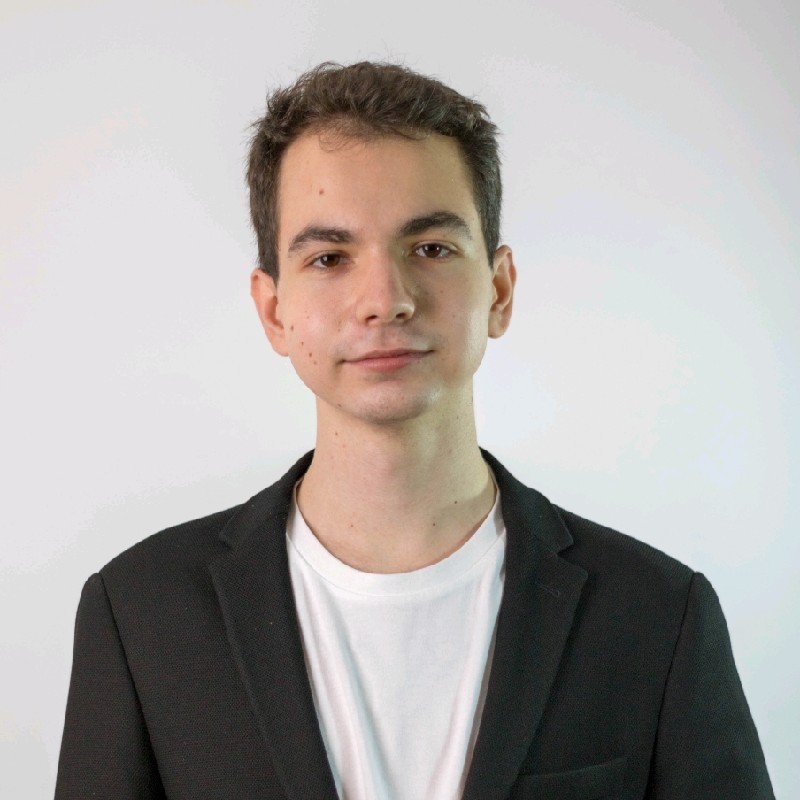
Ion Orins
MSc, University of Oxford, 2023
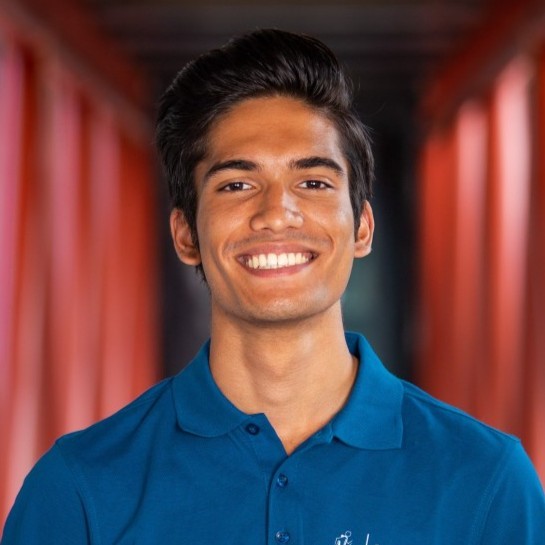
Tuhin Das
MSc, University of Oxford, 2023
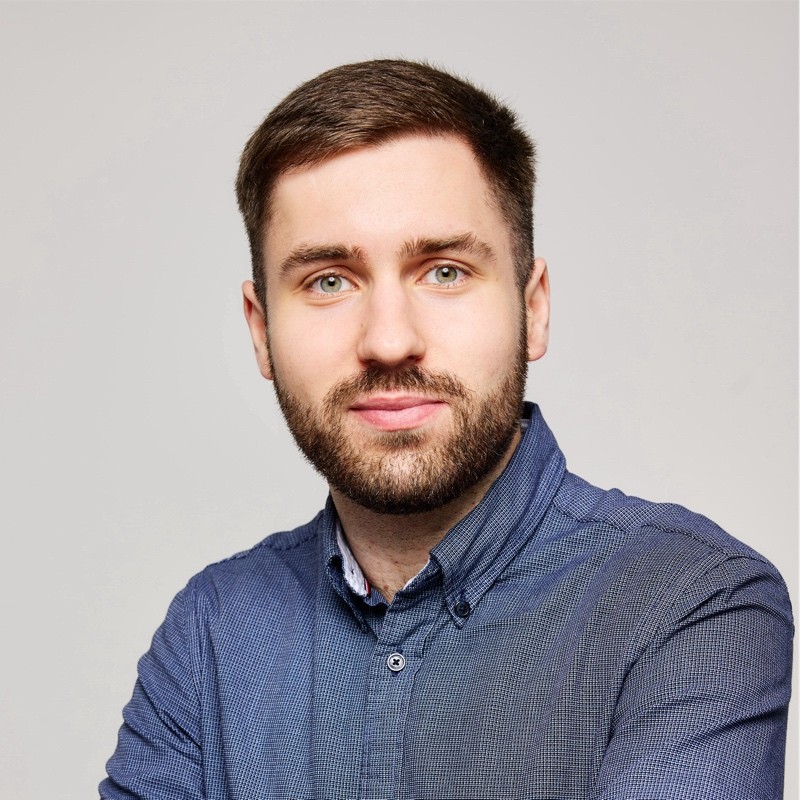
Taras Rumezhak
MSc, University of Oxford, 2023
Visitors

Ziyan Wang
Visitor, King's College London, March 2026 - September 2026

Carlos Hinojosa
Visitor, KAUST, May 2026

Alisia Baielli
Visitor, University of Amsterdam, May 2026
Kumail Alhamoud
Visitor, MIT, May 2024 - September 2024

Lama Alssum
Visitor, KAUST, October 2024 - January 2025
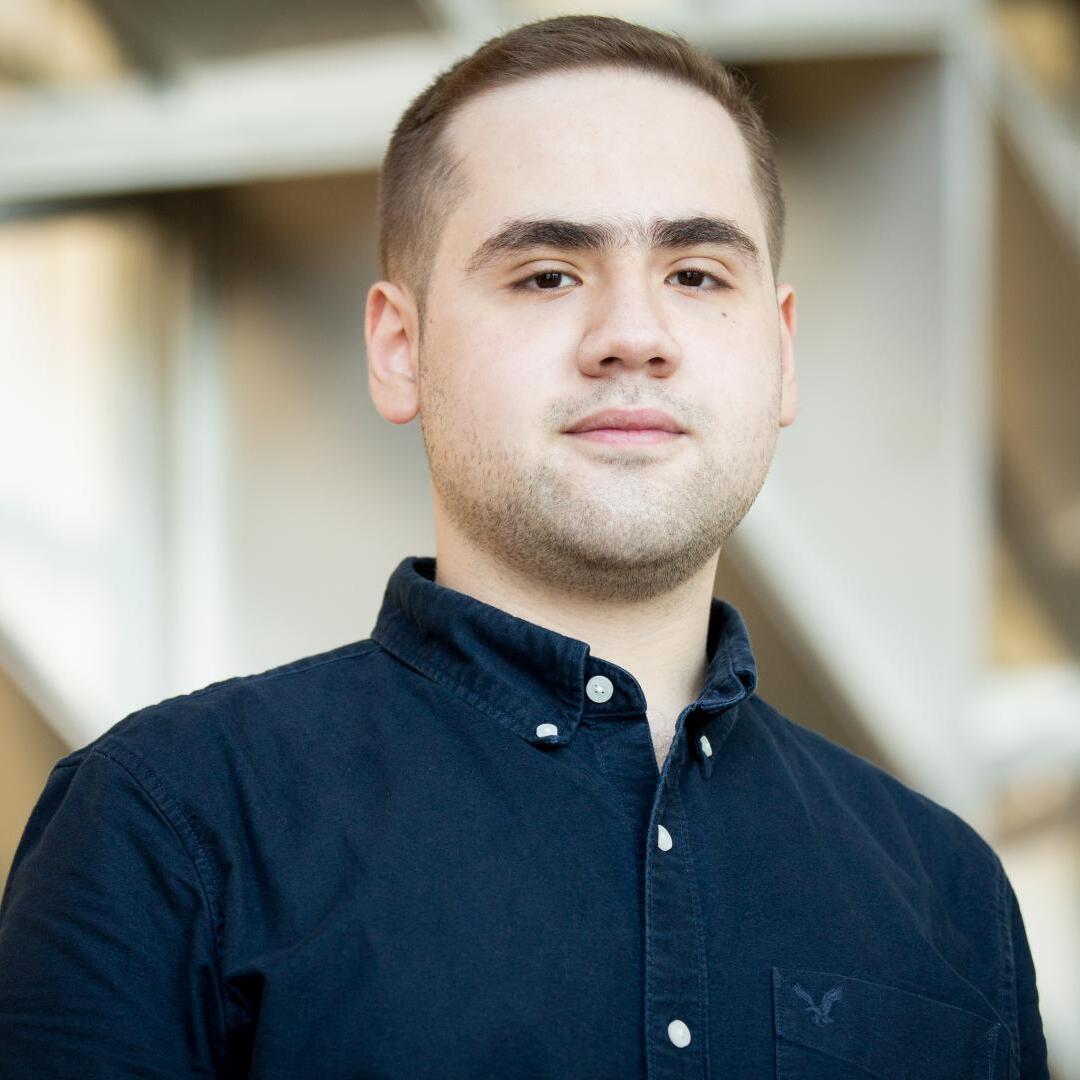
Hasan Abed Al Kader Hammoud
Visitor, KAUST, July 2023 - November 2023
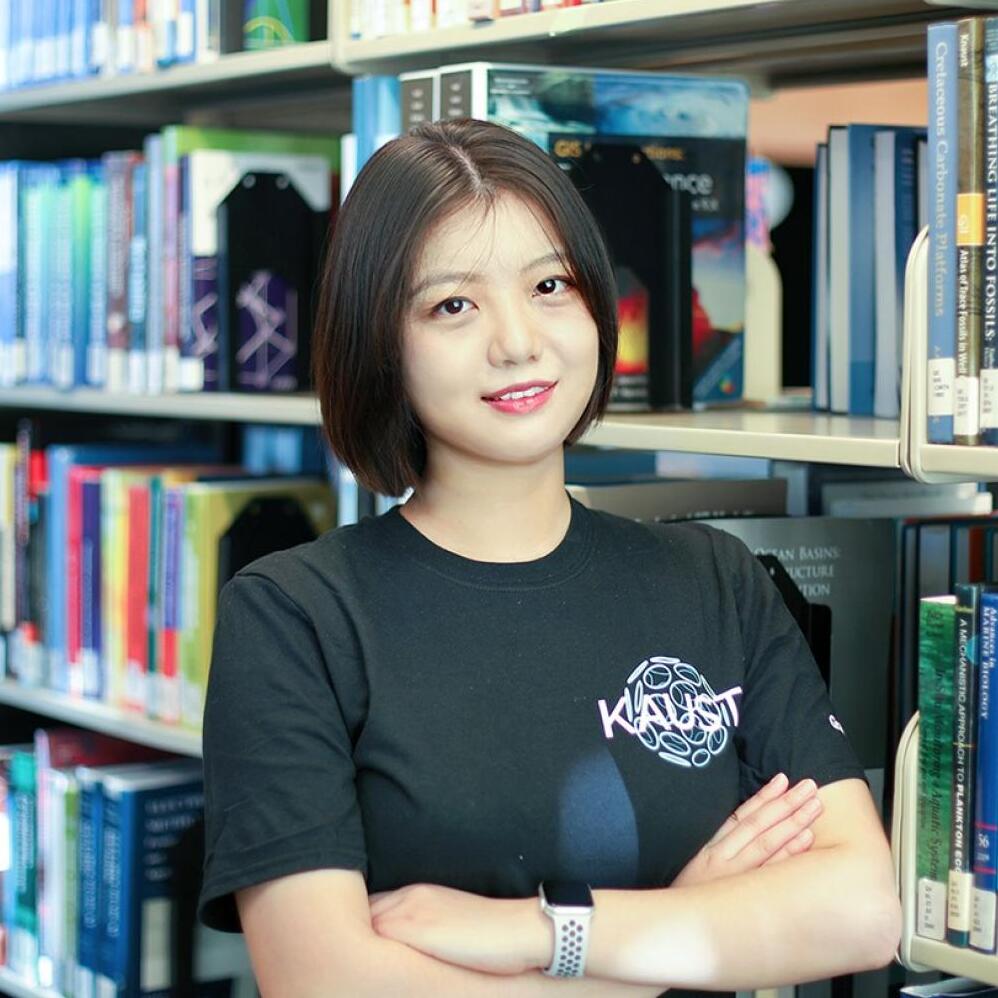
Wenxuan Zhang
Visitor, July 2023 - November 2023
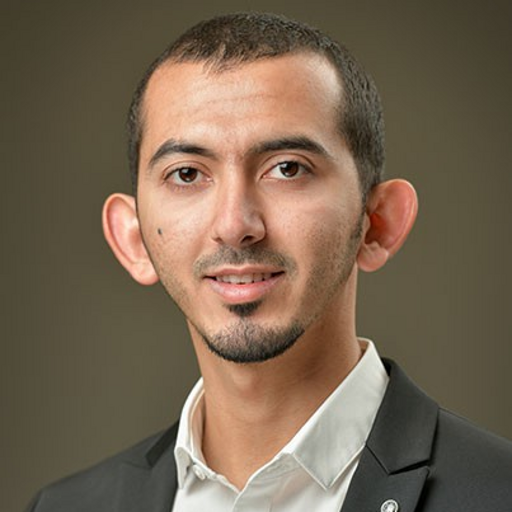
Yasir Ghunaim
Visitor, KAUST, July 2023 - November 2023
Motasem Alfarra
Visitor, KAUST, October 2021 - March 2022
News
- [September 24th, 2026]: Three papers accepted to NeurIPS 2026.
- [September 23rd, 2026]: I was interviewed three times by the Associated Press on AI safety and security, where AI is heading, and the geopolitics surrounding it; see here.
- [September 16th, 2026]: I shared my take on the recent UK AISI report on AI agents hijacking systems and carrying out sophisticated social engineering attacks, in conversation with Michael Walker on Novara Media.
- [July 9th, 2026]: Our paper LLMs Struggle to Rank Products Robustly received a Best Paper Award at an ICML 2026 Workshop. Congratulations to Kumail Alhamoud!
- [April 30th, 2026]: One papers accepted to ICML 2026.
- [March 30th, 2026]: Shortlisted for Oxford University Vice-Chancellor’s Breakthrough Researcher Award: Recognizing researchers at the early stages of their careers who have made a significant impact at the University. Breakthrough Research in Agentic AI Safety and Security. Developing safeguards to identify vulnerabilities in AI agents to prevent them from leaking sensitive information or assisting malicious actors.
- [February 21st, 2026]: One paper accepted to CVPR 2026.
- [January 27th, 2026]: Two papers accepted to ICLR 2026.
- [January 8th, 2026]: Invited by the Information Commissioner’s Office (ICO) to contribute a piece in their Tech Futures: Agentic AI report.
~~ End of 2025 ~~
- [December 4th, 2025]: Awarded the Coefficient Giving Grant of ~ $260,000 to investigate transferable adversarial inputs capable of inducing malicious agent behaviour.
- [DNovemberecember 14th, 2025]: Our Agent Trust Simulation project received the Outstanding Paper Award at the 1st Workshop on LLM Agents for Social Simulation (LASS) at CIKM 2025.
- [December 3rd, 2025]: Our NeurIPS 2023 paper on tokenization’s impact on AI evaluation has been featured in the Hugging Face Evaluation Guidebook.
- [November 4th, 2025]: Our new paper in NeurIPS25 on evaluating progress in AI safety evaluations has been featured by The Guardian and NBC News.
- [November 3rd, 2025]: Featured on Globo TV’s “Digital Minds” segment — watch on Globoplay for our work on AI Safety. Globo is the largest media group in Latin America.
- [September 18th, 2025]: Three Papers accepted to NeurIPS25.
- [September 4th, 2025]: Our new work, paper/video, about hijacking agentic systems and demonstrating AI worms has been featured by the Scientific American.
- [July 28th, 2025]: My department, Engineering Science at Oxford University, has awarded me the Excellence Award for outstanding performance throughout 2024/2025. This comes with a nice monetary gift.
- [June 10th, 2025]: Our recent work on hijacking AI agents and creating an AI worm was featured on YouTube by Sabine Hossenfelder, a channel with over 1.7 million subscribers. More importantly, one that I watch frequently.
- [May 1st, 2025]: One paper accepted to ICML 2025.
- [April 3rd, 2025]: I was awarded the Systemic AI Safety grant (~$250,000) by the UK AI Security Institute. This was awarded to 20 applicants of a 451 (~4% acceptance rate).
- [March 12th, 2025] I was interviewed by Al Ekhbariya Channel, which was broadcast on TV and radio, highlighting my recent state-of-the-art research and my academic journey that began at KAUST in Saudi Arabia; Watch interview on X.
- [February 11th, 2025]: Four papers accepted to ICLR 2025; one paper of which as spotlight.
- [September 25th, 2024]: Five papers accepted to NeurIPS 2024.
- [September 20th, 2024]: I received the Google Gemma 2 Academic Program GCP Credit Award ($10,000).
- [August 18th, 2024]: I joined Softserve as an R&D Distinguished Advisor.
- [July 8th, 2024]: One paper accepted to MICCAI 2024.
- [June 3rd, 2024]: One paper accepted to ECCV 2024.
- [June 3rd, 2024]: Four papers accepted to ICML 2024. Special congrats to all students' lead authors. One accepted as Oral.
- [May 28th, 2024]: Kumail Alhamoud is visiting me and Phil for 3 months this summer. Welcome, Kumail!
- [May 23rd, 2024]: I am selected to serve as a Senior Area Chair for NeurIPS4.
- [May 14th, 2024]: I was invited by the Rt Hon Deputy Prime Minister Oliver Dowden to be part of the official British Delegation (GREAT FUTURES) to Saudi Arabia on a trade expo towards improving collaborations on all fronts between the two nations.
- [May 11th, 2024]: Media Coverage: Our recent paper on No “zero-shot” without exponential data has been covered and featured by Computerphile (~2.5 million subscribers) one youtube; see video here. Moreover, Sam Altman of OpenAI has also commented on reddit on our paper saying OpenAI is exploring similar directions. See details here.
- [April 19th, 2024]: I was invited to give a number of talks in MBZUAI and the Oxford Robotics Institute.
- [February 15th, 2024]: I gave a talk to TAHAKOM on AI Safety Research.
- [February 13th, 2024]: I gave a talk at the AI Safety meeting in the Said Busienss School in Oxford in our work on AI Safety.
- [February 7th, 2024]: Our paper SynthCLIP: Are We Ready for a Fully Synthetic CLIP Training? on training CLIP with only synthetic data was advertised on TLDR News which has over 1M subscribers.
- [January 21th, 2024]: Three papers accepted to ICLR24 (one as spotlight).
~~ End of 2023 ~~
- [December 16th, 2023]: Our paper When Do Prompting and Prefix-Tuning Work? A Theory of Capabilities and Limitations received the Entropic Paper Award at the NeurIPS 2023 Workshop: I Can’t Believe It’s Not Better (ICBINB): Failure Modes in the Age of Foundation Models.
- [December 12th, 2023]: Received a Notable Area Chair Award in NeurIPS23 (awarded to 8.1% of 1223).
- [December 9th, 2023]: One paper (SimCS: Simulation for Domain Incremental Online Continual Segmentation) accepted to AAAI24.
- [November 2nd, 2023]: I gave two talks on trustworthy AI to Kuwait University and Intematix, a startup based in Riyadh in Saudi Arabia.
- [September 21st, 2023]: One paper on Language Model Tokenizers Introduce Unfairness Between Languages has been accepted to NeurIPS23.
- [September 5th, 2023]: Invited by Dima Damen to give a talk at Bristol University.
- [July 18th, 2023]: One robustness paper is accepted to TMLR.
- [July 11th, 2023]: Our paper on Provably Correct Physics-Informed Neural Networks received the outstanding paper award in the Formal Verification Workshop in ICML23.
- [July 14th, 2023]: One paper on online continual learning is accepted to ICCV 2023.
- [July 11th, 2023]: Our paper Provably Correct Physics-Informed Neural Networks received an outstanding paper award at WFVML ICML23 workshop.
- [June 23rd, 2023]: One paper accepted to DeployableGenerativeAI (ICML23 Workshop).
- [June 20th, 2023]: Three papers accepted to AdvML-Frontiers (ICML23 Workshop).
- [June 18th, 2023]: Invited to give a talk at the CLVision workshop in CVPR23. I was also part of the panel discussion.
- [April 24th, 2023]: One paper accepted to ICML 2023.
- [March 29th, 2023]: Four papers accepted to CLVision (CVPR23 Workshop).
- [March 9th, 2023]: Media coverage by DOU, a Ukrainian development community focused on technologies, frameworks, and code, for my work with Taras Rumezhak.
- [March 1st, 2023]: I am promoted to a Senior Researcher (G9) in Machine Learning and Computer Vision at Oxford.
- [February 28th, 2023]: I will serve as an Area Chair for the NeurIPS 2023.
- [February 27th, 2023]: Two papers accepted to CVPR 2023. One of the two papers is accepted as a highlight (2.5% of ~9K submissions).
- [January 23th, 2023]: I will serve as an Area Chair for the ICLR 2023 Workshop on Trustworthy ML.
~~ End of 2022 ~~
- [December 9th, 2022]: I will serve as a Senior Program Committee (Area Chair/Meta Reviewer) for IJCAI 2023.
- [November 3rd, 2022]: Joined the ELLIS Society as a member.
- [October 11th, 2022]: One paper accepted to WACV23.
- [October 10th, 2022]: Received an Amazon Research Award.
- [September 14th, 2022]: Our paper N-FGSM accepted to NeurIPS22.
- [August 28th, 2022]: Our paper ANCER was accepted in Transactions on Machine Learning Research (TMLR).
- [August 15th, 2022]: Our paper on Tropical Geometry was accepted to appear in the IEEE Transactions on Pattern Analysis and Machine Intelligence (TPAMI).
- [July 11th, 2022]: I will serve as a Senior Program Committee (Area Chair/Meta Reviewer) for AAAI23.
- [May 26th, 2022]: Three papers accepted to the Adversarial Machine Learning Frontiers ICML2022 workshop! Papers will be coming on arXiv soon.
- [May 16th, 2022]: Our paper titled Data Dependent Randomzied Smoothing is accepted to UAI22.
- [April 22nd, 2022]: I was selected as the Highlighted Reviewer of ICLR 2022 and received a free conference registration.
~~ End of 2021 ~~
- [Dec 1st, 2021]: I got promoted to a Senior Research Associate (G8) in machine learning of the Torr Vision Group (TVG) at the University of Oxford.
- [Dec 1st, 2021]: Two papers, Combating Adversaries with anti-adversaries and DeformRS: Certifying Input Deformations with Randomized Smoothing, are accepted in AAAI22.
- [Nov 18th, 2021]: We were awarded KAUST’s Competitive Research Grant with a total of > 1.05M$ (one million USD). This is a 3 years collaboration between KAUST and Oxford.
- [Oct 15th, 2021]: Rethinking Clustering for Robustness is accepted in BMVC21.
- [June 22nd, 2021]: Anti Adversary paper is accepted in Adversarial Machine Learning Workshop @ICML21.
- [June 13th, 2021]: I have been elected as a Junior Research Fellow of Kellogg College, University of Oxford. Appointment starts in October 2021.
- [March 28th, 2021]: ETB robustness paper is accepted in RobustML Workshop @ICLR21.
~~ End of 2020 ~~
- [November 8th, 2020]: New paper on robustness is on arXiv.
- [November 8th, 2020]: New paper on randomized smoothing is on arXiv.
- [October 15th, 2020]: I joined the Torr Vision Group working with Philip Torr at the University of Oxford.
- [July 2nd, 2020]: Gabor layers enhance robustness paper accepted to ECCV20 arXiv.
- [June 30th, 2020]: One paper is out on new expressions for the output moments of ReLU based networks with various new appliactions arXiv.
- [June 24th, 2020]: New paper with SOTA results, backed with theory, on training robust models through feature clustering arXiv.
- [March 31st, 2020]: I have sucessfully defended my PhD thesis.
~~ End of 2019 ~~
- [Dec 20th, 2019]: One paper accepted to ICLR20.
- [Nov 11th, 2019]: One spotlight paper accepted to AAAI20.
- [Sept 25th, 2019]: Recognized as outstanding reviewer for ICCV19. Link.
- [August 5th, 2019]: I was invited to give a talk about the most recent research in computer vision and machine learning from the IVUL group at PRIS19, Dead Sea, Jordan. I also gave a 1 hour long workshop about deep learning and pytorch. Slides1/Slides2/Material.
- [July 6th, 2019]: I was invited to give a talk at the Eastern European Conference on Computer Vision, Odessa, Ukraine. Slides.
- [June 28th, 2019]: I gave a talk at the Biomedical Computer Vision Group directed by Prof Pablo Arbelaez, Bogota, Colombia. Slides.
- [June 15th, 2019]: Attended CVPR19.
- [June 9th, 2019]: Recognized as an outstanding reviewer for CVPR19. This is the second time in a row for CVPR. Check it out. :)
- [May 26th, 2019]: A new paper is out on derivative free optimization with momentum with new rates and results on continuous controls tasks. arXiv.
- [May 25th, 2019]: New paper! New provably tight interval bounds are derived for DNNs. This allows for very simple robust training of large DNNs. arXiv.
- [May 11th, 2019]: How to train robust networks outperforming 2-21x fold data augmentation? New paper out on arXiv.
- [May 6th, 2019]: Attended ICLR19 in New Orleans.
- [Feb 4th, 2019]: New paper on derivative-free optimization with importance sampling is out! Paper is on arXiv.
~~ End of 2018 ~~
- [Dec 22nd, 2018]: One paper accepted to ICLR19, Louisiana, USA.
- [Nov 6th, 2018]: One paper accepted to WACV19, Hawaii, USA.
- [July 3rd, 2018]: One paper accepted to ECCV18, Munich, Germany.
- [June 19th, 2018]: Attended CVPR18 and gave an oral talk on our most recent work on analyzing piecewise linear deep networks using Gaussian network moments. Tensorflow, Pytorch and MATLAB codes are released.
- [June 17th, 2018]: Received a fully funded scholarship to attend the AI-DLDA 18 summer school in Udine, Italy. Unfortunately, I won’t be able to attend for time constraints. Link
- [June 15th, 2018]: New paper out! “Improving SAGA via a Probabilistic Interpolation with Gradient Descent”.
- [April 30th, 2018]: I’m interning for 6 months at the Intel Labs in Munich this summer with Vladlen Koltun.
- [April 22nd, 2018]: Recognized as an outstanding reviewer for CVPR18. I’m also on the list of emergency reviewers. Check it out. :)
- [March 6th, 2018]: One paper accepted as [Oral] in CVPR 2018.
- [Feb 5, 2018]: Awarded the best KAUST poster prize in the Optimization and Big Data Conference.
~~ End of 2017 ~~
- [Decemmber 11, 2017]: TCSC code is on github.
- [October 22, 2017]: Attened ICCV17, Venice, Italy.
- [July 22, 2017]: Attened CVPR17 in Hawaii and gave an oral presentation on our work on solving the LASSO with FFTs, July 2017.
- [July 16, 2017]: FFTLasso’s code is available online.
- [July 9, 2017]: Attended the ICVSS17, Sicily, Italy.
- [June 15, 2017]: Selected to attend the International Computer Vision Summer School (ICVSS17), Sicily, Italy.
- [March 17, 2017]: 1 paper accepted to ICCV17.
- [March 14, 2017]: Received my NanoDegree on Deep Learning from Udacity.
- [March 3, 2017]: 1 oral paper accepted to CVPR17, Hawai, USA.
~~ End of 2016 ~~
- [October 19, 2016]: ECCV16’s code has been released on github.
- [October 8, 2016]: Attended ECCV16, Amsterdam, Netherlands.
- [July 11, 2016]: 1 spotlight paper accepted to ECCV16, Amsterdam, Netherlands.
- [June 26, 2016]: Attended CVPR16, Las Vegas, USA. Two papers presented.
- [May 13, 2016]: ICCVW15 code is now avaliable online.
- [April 11, 2016]: Successfully defended my Master’s Thesis.
- [March 2, 2016]: 2 papers (1 spotlight) accepted to CVPR16, Las Vegas, USA.
~~ End of 2015 ~~
Grants, Funding & Media Coverage
Research grants and funding received, and media coverage of our work


Awards and Recognition


Featured Publications


Recent & Upcoming Talks


Contact
- adel.bibi@eng.ox.ac.uk
- 20.16, Department of Engineering Science, University of Oxford, Parks Road, Oxford, OX1 3PJ